

Luxury Is Not Excess. It Is Care.
The word "luxury" comes from the Latin luxus, which carried connotations of softness, of ease, of sensory richness. It described how something felt against the body and the mind. Somewhere between then and now, the word changed. It stopped describing a quality of experience and started describing a quantity of expenditure. Luxury became a price point. And in becoming a price point, it lost the thing that once made it meaningful.
Walk through any airport duty-free and you can watch this corruption in real time. Luxury has become a visual language of logos, gold finishes, and price tags left strategically visible. It is loud. It is abundant. It announces itself the way someone who is not quite sure of their standing in a room speaks a little too forcefully. The modern luxury industry, in many of its most visible expressions, is not selling experience. It is selling evidence. Proof that you can afford to be here. Proof that you belong to a certain tier. The product is secondary to the performance.
This is not an argument against beautiful things, or against spending money on them. Cost and quality are genuinely related in many cases. A well-made leather bag will outlast a cheap one. A hand-stitched suit fits differently than one cut by machine. There is real, material value in craftsmanship, and pretending otherwise is its own kind of dishonesty. But there is a difference between quality and spectacle. Between something made well and something made loudly. And what the modern luxury market often sells is volume where it should be selling discernment.
The Difference You Already Know
Most of us understand this distinction intuitively, even if we haven't named it. Think about the last time you felt genuinely cared for in a commercial setting. Not impressed. Not overwhelmed. Cared for. The distinction is physical. Being impressed is a cognitive experience: your mind registers cost, scale, effort. Being cared for is a bodily one: your shoulders drop, your breathing slows, you stop performing your own experience and simply have it.
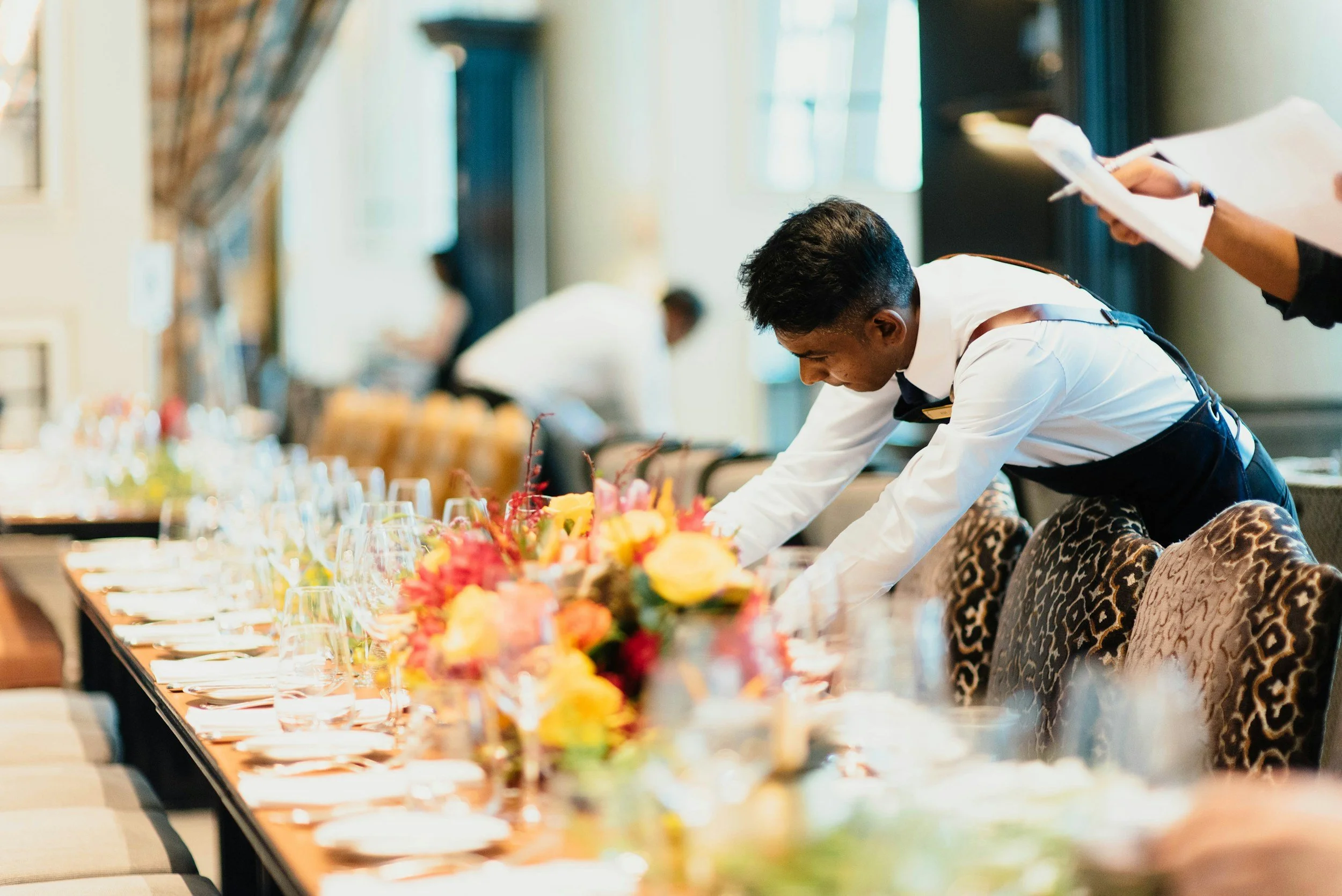
It might have been a restaurant where the server noticed you were cold and brought a blanket without being asked. A shop where someone remembered what you bought last time. A hotel where the room was arranged not for visual impact but for how you would actually move through it: the reading light in the right place, the luggage rack where your hands would naturally set it down, the quiet that meant someone had thought about which direction the windows faced.
These moments stay with us not because they were expensive but because they were specific. Someone thought about us before we arrived. Someone considered our experience before we had it. That is luxury in its original sense. Not the thread count, not the square footage, not the number of stars on the door. The thinking.
Restraint as a Form of Generosity
One of the clearest markers of genuine luxury is restraint. Not austerity. Not minimalism as an aesthetic brand. But the disciplined choice to do fewer things with greater care.
Consider two hotels. The first offers seventeen restaurants, a spa menu the length of a novella, three pools, a golf course, a kids' club, a business center, a cocktail bar with a mixologist who trained somewhere impressive, and a pillow menu. The second offers six rooms, one kitchen, a garden, and someone who remembers what you mentioned in passing when you booked.
The first hotel is working very hard to ensure you have no reason to leave. The second is working very hard to ensure you have no desire to. These are fundamentally different philosophies, and they produce fundamentally different experiences. One is generous with options. The other is generous with thought.
The Japanese concept of omotenashi captures this distinction beautifully. Often translated as hospitality, it means something closer to wholehearted care without expectation of reciprocity. The host anticipates the guest's needs before they are expressed. The gesture is invisible by design. In a culture where luxury is understood this way, the highest compliment is not that something was lavish but that it was seamless. That the care was so thorough it disappeared into the experience itself.
There is a well-known practice in traditional Japanese inns: the innkeeper studies each guest's reservation, considers their likely needs, and prepares the room accordingly. The yukata folded to the guest's height. The tea selected for the season and the hour of arrival. The garden view or the mountain view, chosen not at random but based on what the innkeeper believes this particular guest will find most restful. None of this is announced. The guest may never realize the extent of the preparation. That is the point. The care is not performed for appreciation. It simply exists, quietly, in the space between intention and experience.
The French have a parallel instinct, though it expresses differently. A well-set French table is not about the most expensive china. It is about proportion, rhythm, the logic of the courses, the temperature of the wine, the weight of the glass in your hand. Everything has been considered so that nothing distracts. The luxury is in the absence of friction. In Scandinavia, the tradition runs toward function elevated to beauty: the chair that supports your body perfectly, the lamp that casts exactly the right warmth, the knife that fits your grip as though it were made for your hand alone. In each of these traditions, luxury is not decorative. It is structural. It is how well something works for the person using it.
The Objects That Matter Most
There is a useful test you can apply in your own home. Look around and identify the object you use most often. Not the most expensive thing you own. The most used. The kitchen knife you reach for every evening. The mug that fits your morning. The blanket you pull over your legs while reading. The pen, if you are someone who still writes by hand.
Now ask yourself what makes that object irreplaceable. Almost certainly, it is not its cost. It is its fit. It has shaped itself to your life, or you have shaped your life around it, and the relationship between you and this object is one of mutual accommodation. It does its work without fuss. It does not announce itself. It simply serves you, day after day, and in doing so becomes something no amount of money could replicate: yours.
This is what luxury looks like in the context of daily life. Not the statement piece on the mantel that visitors admire. The quiet thing in the drawer that makes your morning work. Objects that earn their place through use, that age into beauty rather than away from it, that carry the particular evidence of your hands and your habits. A wooden spoon darkened by years of stirring. A leather bag softened to the exact shape of what you carry. A wool throw that has held the warmth of ten winters of reading.
These things are luxurious not because someone has told you they are, but because your body knows it. They have been chosen with care, and they return that care daily.
Why Care Is Rarer Than Opulence
Here is the inconvenient truth about care as a luxury: it does not scale well. Opulence scales beautifully. You can build a thousand identical suites with marble bathrooms and gold fixtures and replicate the experience with mechanical precision. You can train staff to follow scripts, to smile on cue, to offer the same welcome drink in the same glass at the same temperature in every property across every continent. This is impressive logistics. It is not care.
Care requires knowledge of the specific person. It requires someone to have paid attention, to have remembered, to have thought ahead on your behalf. It requires a kind of creative empathy that no manual can teach and no franchise can guarantee. The innkeeper who prepares a room for a particular guest has done something that cannot be systematized. She has treated that guest as a particular person arriving on a particular evening, and she has responded to that particularity with effort that will go unnoticed by anyone except the person it was meant for.
This is why care is more valuable than opulence. Not because opulence is bad, but because care is rare. In an economy that has mastered the replication of expensive surfaces, the thing that cannot be replicated is genuine attention. The willingness to know someone. The effort to anticipate rather than merely respond. The restraint to do less, but to do it with a specific person in mind.
A Recalibration
This is not an argument against beauty, or against spending, or against the pleasure of extraordinary things. A perfectly made coat is a joy. A great bottle of wine shared at the right table on the right evening is worth every cent. There are hotel rooms that take your breath away with their beauty, and that beauty is real and worth pursuing.
But there is a distinction worth drawing between luxury that performs for an audience and luxury that exists for the person experiencing it. Between the restaurant that wants you to photograph the plate and the one that wants you to taste the sauce. Between the hotel that wants you to be impressed by the lobby and the one that wants you to sleep well. Between the object that signals taste and the one that serves life.
The first kind is everywhere. It is what the industry calls luxury, and it is available to anyone with sufficient resources. The second kind is harder to find, because it requires someone on the other end who has thought about you. Not about a customer. Not about a demographic. About you. Your habits, your morning rhythms, your particular need for quiet or light or warmth.
That is what luxury should mean. Not excess, but care. Not volume, but attention. Not the loudest thing in the room, but the most considered. The version of luxury that is harder to build and harder to sell because it cannot be photographed or branded or replicated at scale. The version that, once you have experienced it, makes everything else feel like noise.
It is the room arranged for how you actually live in it. The object that fits your hand so perfectly you forget it is there. The detail no one mentions because it was never meant to be mentioned. It was only ever meant to be felt.
The Difference Between Traveling and Arriving
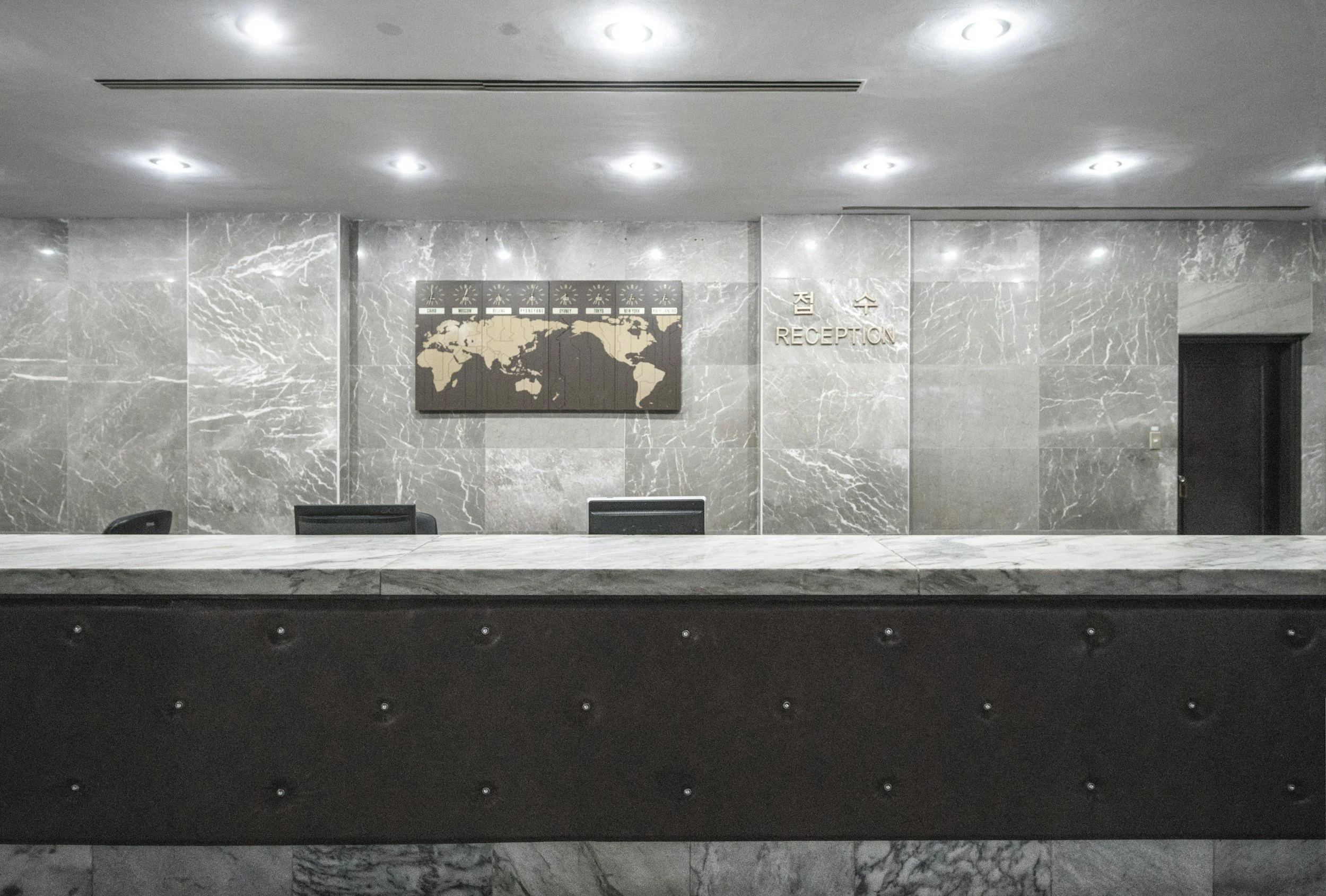
I've watched people check into hotels, unpack their bags, shower off the flight, and then spend the next three days still somewhere over the Atlantic. Their bodies made it. Their attention didn't.
There's a specific kind of exhaustion that comes not from jet lag but from the sustained effort of translating everything you encounter back into terms you already understand. The mental work of constant conversion: this street reminds me of home, this meal costs about the same as that restaurant I love, this weather is just like October back there. It's the tyranny of comparison, and it keeps you tethered to the place you left rather than present to the place you're in.
Arrival, I've learned, is not the same thing as landing.
The Geography of Attention
Most of us conflate physical displacement with actual travel. We think that because we've crossed time zones and borders, changed currencies and maybe languages, we've traveled. But travel (real travel) requires more than movement through space. It requires a corresponding movement of attention, a willingness to let your nervous system catch up with your body.
I notice this most clearly in the first morning of a trip. Not the scrambled, disoriented arrival day, but the first full morning when you wake up without an alarm and have nowhere you must be. There's a moment, usually sometime after coffee, when the translation stops. When you stop converting the street sounds into familiar categories and simply hear them. When the light through unfamiliar windows becomes just light, not "different light" or "foreign light" or something you need to describe.
That's arrival. And it's rare.
Most people spend entire trips in a state of productive tourism: checking boxes, taking photos, collecting experiences to recount later. They're doing the place rather than being in it. Which is fine. I'm not making a moral argument about the right way to travel. But I am noticing that there's a profound difference between moving through somewhere and allowing somewhere to move through you.
The Nervous System Lag
Your body can cover enormous distances while your nervous system remains stubbornly local. I've felt this landing in new places where I should be ecstatic (I've been planning this for months, I'm finally here) but instead I'm irritable, hypercritical, cataloging everything that's wrong or different or harder than expected. The bed is too firm. The coffee is wrong. The shower doesn't work the way I expect it to.
This isn't discernment. It's defense.
When you're still traveling (still in that state of productive displacement) everything is measured against an invisible baseline of home. Your nervous system is doing what it evolved to do: assess threat, identify the unfamiliar, maintain vigilance. It's exhausting. And it makes presence nearly impossible.
I think this is why the first twenty-four hours of any trip matter more than we give them credit for. Not because you need to "maximize" them or "hit the ground running" (that's the exact opposite of what I'm talking about). But because those first hours set the terms for everything that follows. If you arrive and immediately begin performing travel (navigating, accomplishing, documenting) you establish a pattern that's hard to break. You teach yourself that being somewhere means doing somewhere.
But if you arrive and do almost nothing (walk without destination, sit in a café longer than feels productive, let yourself be genuinely bored for a while) you give your attention permission to stop translating. To stop comparing. To simply land.
The Phenomenology of Being There
I remember driving across Ireland last fall for a friend's wedding. The first two days were exactly what you'd expect: stunning but somehow generic. I was collecting moments rather than having them. Every village looked like the Ireland I'd already imagined. Every coastline was beautiful in a way I was mentally filing under "beautiful Irish coastline" for later reference. I was taking photos at every stop, already thinking about how I'd describe this to people back home.
Then somewhere on the third day, driving the back roads of County Clare with no particular destination, something shifted. I can't point to what caused it. Maybe accumulated rest, maybe the particular quality of afternoon light coming sideways across the stone walls, maybe just time. But I stopped trying to understand Ireland in relation to anywhere else. I stopped interpreting it. The road became just the road I was on, not "the Irish countryside" or "this amazing drive" or material for a story. I pulled over near a field of sheep and sat there for thirty minutes watching them. Not thinking about them, not photographing them, just watching them exist. And for the first time since landing, I was actually in Ireland rather than at Ireland.
This is what I mean by arrival. It's not transcendent. It's not even always pleasant. But it's actual presence: the end of that low-grade translation work, the dropping of comparison as your primary mode of perception.
What Delays Arrival
I've noticed several things that reliably prevent this shift:
Overscheduling. When every hour has an objective, you never create the spaciousness required for your attention to settle. You remain in execution mode, moving from task to task, which is fine for getting things done but antithetical to being anywhere.
Constant documentation. The moment you're composing the story of your experience for an audience, you split your attention. Part of you is having the experience, part of you is watching yourself have it, and part of you is already narrating it. This isn't presence. It's performance.
Resistance to disorientation. The unfamiliar makes us uncomfortable. Our instinct is to resolve that discomfort quickly: find the familiar, establish routine, make the foreign feel manageable. But arrival requires sitting with disorientation long enough that it stops feeling like disorientation and starts feeling like simply being somewhere else.
The pressure to optimize. We're so conditioned to extract value from our time that we treat travel as investment rather than experience. We want ROI on our vacation days. But you can't optimize presence. You can only create conditions where it becomes possible.
Returning Is Also Arrival
Here's what surprised me: re-entry follows the same pattern. Coming home requires arrival just as much as leaving did.
I've watched myself walk back into my house after weeks away and immediately begin the work of translating vacation-self back into home-self. Unpacking urgently. Checking email. Returning to familiar rhythms as quickly as possible to prove the trip didn't destabilize anything important. As if the point of leaving was to return unchanged.
But that translation work (that rush to reconstitute normal life) prevents you from actually coming home. You end up in a strange liminal state where you're physically home but psychologically still somewhere between there and here. Your attention hasn't caught up. You haven't arrived.
The best re-entries I've experienced have been the ones where I've given myself the same kind of spaciousness I need when arriving somewhere new. A morning with no agenda. A walk around the neighborhood as if seeing it for the first time. Permission to feel strange in familiar spaces. The recognition that home, too, is a place you have to arrive at rather than simply return to.
Designing for Arrival
This is where my work as a travel planner intersects with these ideas. I'm not interested in itineraries that maximize sights per day or deliver the most Instagram-worthy moments per square mile. I'm interested in building trips that create conditions for actual arrival.
That means different things for different people and different trips. For some, it's a full day built into the itinerary with nothing on it: no reservations, no tickets, no must-sees. Just waking up somewhere and figuring out what being there actually feels like.
For others, it's a specific kind of first evening: no dinner reservation, no plan, just instructions to walk until you're hungry and eat wherever you find yourself. Not because that's romantic or adventurous, but because it forces you to pay attention to your actual experience rather than following a script.
Sometimes it's as simple as staying in one place long enough that you stop being a visitor. Booking the same café table three mornings in a row until the waiter nods at you. Walking the same route enough times that you notice what's changed rather than just what's there.
The point isn't to prescribe a methodology. The point is to recognize that arrival takes time, attention, and a willingness to stop performing presence and actually practice it.
The Stakes of Staying in Motion
I think about how much travel I've done while remaining essentially elsewhere. All those trips where I saw everything and experienced very little. Where I moved through places efficiently but never let them move through me. Where I collected evidence of having been somewhere without actually being there.
It's a particular kind of loss: not dramatic, but cumulative. Because every place you visit while still traveling is a place you haven't actually been to. Your body was there. Your camera was there. But you weren't.
And unlike a museum you can revisit or a restaurant you can return to, places exist in time as much as space. The Ireland I finally arrived in on day three of that trip doesn't exist anymore. It's not that the country changed (though it has) but that the specific conditions that allowed me to finally be present there were unrepeatable. That particular quality of autumn light. That specific afternoon. That exact configuration of readiness in my own attention.
This is why arrival matters. Not because it makes travel more profound or authentic or whatever other word we use to distinguish experiences we think count more. But because it's the difference between accumulating locations and actually being somewhere. Between moving through the world and letting the world move through you.
A Working Definition
So what is arrival?
It's the moment comparison stops being your primary mode of perception. When you stop translating experience back into familiar terms and start receiving it directly. When your nervous system finally catches up with your body and you're no longer simultaneously here and there, but simply here.
It's not always comfortable. It's not always profound. Sometimes it's boring. Sometimes it's disorienting. Sometimes it happens in the first hour, sometimes it never happens at all.
But when it does (when you finally land not just physically but psychologically) everything changes. The light is different. The sounds are different. Even the air feels different because you're actually breathing it rather than just moving through it.
And that difference, that shift from traveling to arriving, is the entire point.
Seasonality Is a Language We Forgot How to Speak
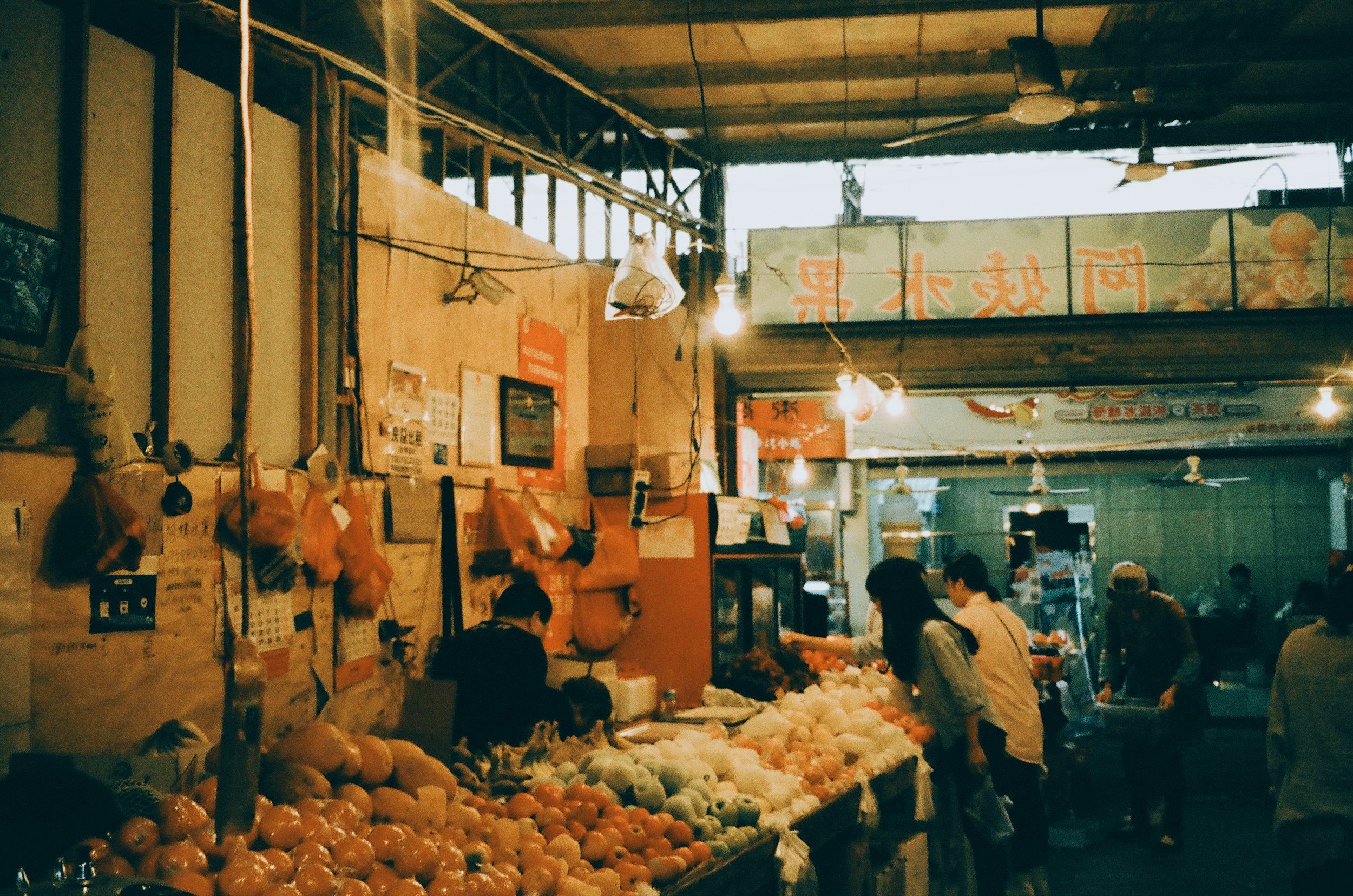
I was standing in a supermarket in January, looking at a display of strawberries. They were pale, expensive, and had clearly traveled a long distance to be there. Technically available. Technically strawberries. But something about them felt wrong in a way I couldn't immediately articulate.
It's not about locavorism or food miles or any particular stance on agricultural economics. It's something harder to name: the sense that when everything is available all the time, we've lost more than a connection to place. We've lost a way of organizing time itself.
Seasonality, I've come to understand, isn't just about what's growing. It's a language, one that modern life has systematically erased, and one that cultures still fluent in it use to create depth, anticipation, and meaning in ways we barely remember are possible.
The Flattening of Time
We live in an era of relentless availability. Climate-controlled homes. Globalized supply chains. Streaming libraries with every film ever made. Restaurants serving the same menu in February and July. This is, in many ways, a genuine luxury. I'm not interested in romanticizing scarcity or pretending winters without oranges were somehow spiritually superior.
But there's a cost we don't talk about.
When strawberries appear in January, mealy and flown in from another continent, they're technically available. But they've been severed from their context. A strawberry in June, warm from the sun and impossibly sweet, isn't just better tasting. It's arrival. It marks something. It signals that the world has shifted, that we're in a different chapter now. The January strawberry offers none of that. It's decoration masquerading as fruit.
This is what I mean by the flattening of time. When the external world offers no variation, when the ambient temperature is always 70 degrees and the supermarket looks the same in April as December, time becomes an abstraction. One month feels like the next. We mark transitions artificially, with holidays, with planners, with notifications, because the world around us has stopped doing it for us.
Seasonality, by contrast, is a calendar written into the fabric of life. It's a way of knowing where you are in the year not by checking your phone, but by noticing what's on the table, what's blooming outside the window, what kind of light is coming through at 6 PM.
What Seasonal Cultures Understand
I lived in Pau, in southwestern France, from January through April one year. I arrived in winter, when the Pyrenees were snow-covered and visible on clear days, when the markets sold root vegetables and citrus and dense winter greens. People wore heavy coats. Cafés kept their doors closed. The light was pale and slanted.
By March, everything had changed. Not just the weather, though that shifted too. The markets transformed. Suddenly there were early strawberries, small and intensely flavored. Asparagus appeared. The light lengthened and warmed. People started sitting outside again, not because it was particularly warm yet, but because something in the season had shifted and it was time.
What struck me wasn't just that things were different. It was that the rhythm of life had changed. People weren't eating the same foods. The pace was different, spring-energized rather than winter-slow. Even the conversations felt different, focused on planting and preparing and the work of the season ahead.
The people who lived there knew this. They didn't see January and April as interchangeable backdrops for the same experience. They saw them as distinct moments, each with its own gifts, its own logic, its own set of possibilities. The time of year didn't just change what was available. It changed what was possible.
This is what seasonality offers that constant availability can't: it gives time texture. It makes months mean something.
Seasonal Living vs. Seasonal Decoration
There's a version of seasonality that's crept into aspirational lifestyle culture, and it's worth naming what it isn't.
I'm talking about the autumnal Instagram aesthetic: pumpkins on porches in mid-September when it's still 85 degrees, cinnamon-scented candles burning while the air conditioning runs, plaid blankets draped over sofas as set dressing. This is seasonal decoration. It gestures at the idea of seasons without actually living with them.
Seasonal living is different. It's structural. It's what happens when you let the external world dictate rhythm instead of imposing your preferences onto it.
It's switching your linens not because it's October and time for "cozy season," but because the temperature has actually dropped and heavier fabric makes sense now. It's eating root vegetables in winter not as a charming choice, but because that's what stores well, what grows in cold ground, what your body wants when it's dark at 5 PM. It's planning travel to a place when it's most itself: Kyoto during cherry blossoms, yes, but also Scotland in January when it's stark and quiet and the landscape reveals a different kind of beauty.
The difference is letting time move through you rather than trying to control it.
I notice this in my own home, small shifts that happen almost automatically when I'm paying attention. In winter, I want heavy pottery, wool blankets, the kind of objects that feel substantial and warm. In summer, I reach for linen, lighter ceramics, things that breathe. I don't plan this. It just happens when I'm attuned to what the season asks for.
This is what cultures that still live seasonally understand: that the calendar isn't arbitrary. That the body responds to shifts in light and temperature and what's growing. That there's a rightness to eating preserved lemons and braised meat in February, and a different rightness to tomatoes and peaches and cold soup in August.
The Problem of Anticipation
Here's what gets lost when everything is always available: anticipation.
Anticipation is what makes experience meaningful. It's the space between wanting something and having it, the heightened awareness that comes from knowing something is temporary, the way scarcity creates attention.
When asparagus appears in April, there's a thrill to it. Not just because it tastes good, but because it's been absent. You've been waiting for it, even if you didn't know you were. You have maybe six weeks before it's gone. So you notice it. You eat it repeatedly. You make a point of it. And then, when it disappears, you let it go. You don't mourn it or scramble to find it. You move on to what's next.
This is a completely different relationship to desire than the one modern consumer culture encourages. We're trained to expect immediate gratification, to believe that wanting something and having it should be separated by as little time as possible. Seasonal living inverts this. It says: some things are worth waiting for. Some things are better because you waited.
I see this most clearly in travel. A trip to Japan during cherry blossom season isn't just about seeing pink trees. It's about arriving at a moment the entire culture has been anticipating, when parks fill with families and friends, when centuries-old poems about impermanence suddenly make sense, when the brevity of the bloom (two weeks, maybe less) creates a collective awareness of time passing.
You can visit Japan in July. It will be beautiful. But you'll miss this. You'll miss the way an entire country pauses to notice something that only happens once a year, the way seasonality creates not just visual beauty but shared meaning.
What We're Reclaiming
I don't think we're going back to a world without year-round tomatoes. And I'm not convinced we should. There are real benefits to availability: nutritional, economic, experiential. Being able to eat citrus in Wisconsin in January is not a moral failing.
But I do think we can ask ourselves: what would it mean to live with the seasons rather than against them? Not as a purity test or a lifestyle performance, but as a way of creating depth and rhythm and attention in daily life?
It might mean choosing to eat strawberries only in June, not because grocery store strawberries in January are unethical, but because you want to preserve the meaning of arrival. It might mean planning a trip to the Loire Valley in autumn when the vineyards are being harvested, not because summer is bad, but because you want to see the place doing what it does at that particular moment in the calendar.
It might mean organizing your home around shifts in light and temperature. Not buying a whole new wardrobe of decor, but noticing when you naturally reach for different textures, different weights, different rituals. A heavier blanket. A different kind of tea. Candles that burn longer as the days get shorter.
These are small things. But they're also profound, because they reconnect us to something older than supply chains and climate control: a way of living that acknowledges we're part of the natural world, not separate from it. That time has texture. That anticipation and scarcity and arrival create experiences that constant availability simply can't.
The Calendar as Guide
What I'm describing isn't nostalgia. It's not about going backward or rejecting modernity or pretending we can return to some imagined pastoral past.
It's about reclaiming a language we still understand, even if we've stopped speaking it fluently. The language of seasonality: of letting time shape experience, of working with the world instead of against it, of creating meaning through rhythm and attention and the willingness to wait.
Seasonality isn't just a planning tool. It's a framework for building a life that feels connected to something beyond the endless scroll, the climate-controlled present tense, the flat sameness of always-available.
It's a way of remembering that time isn't something to be conquered or flattened or filled. It's something to move through, with awareness, with anticipation, with the knowledge that some things are only possible, only right, at particular moments in the turning year.
And when we speak that language again, even imperfectly, we remember: the world has always been changing around us. We just forgot to notice.